
Our Latest Articles
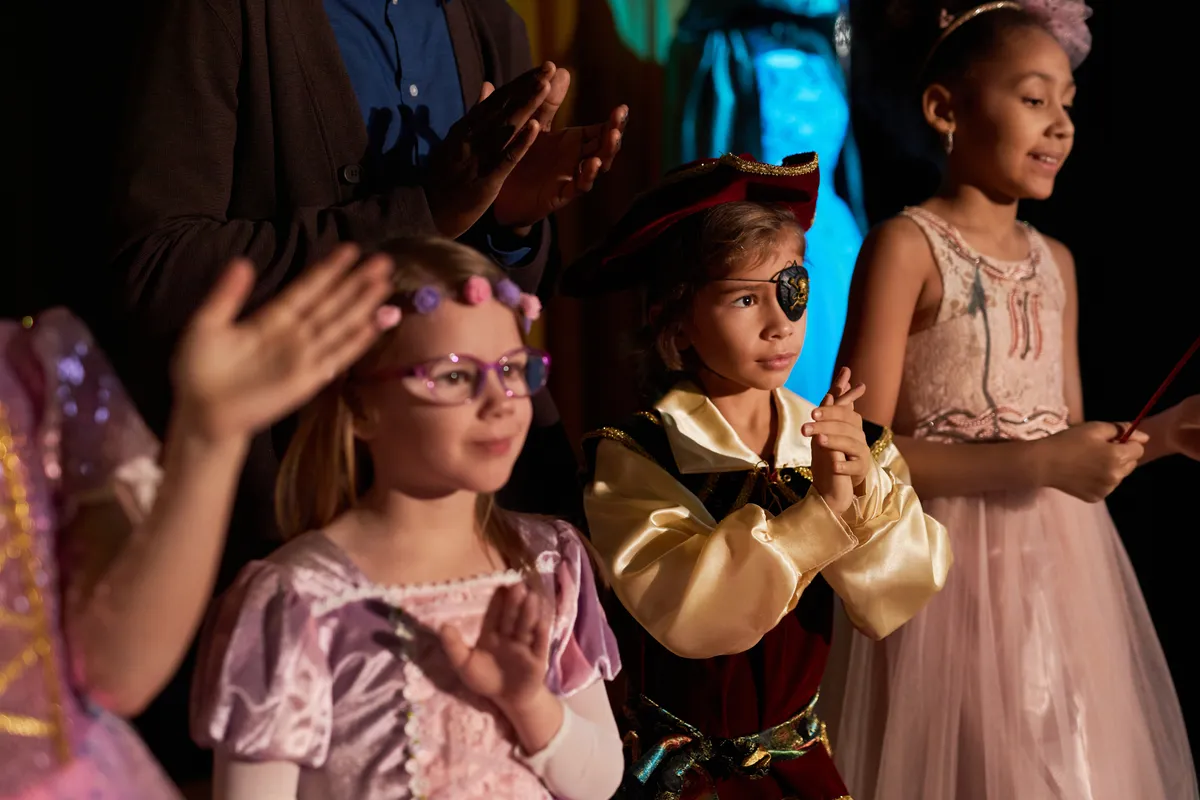
How Kindergarten Teachers Can Use Role-Play for Language Practice
Kindergarten teachers often have a classroom full of children who understand language at different levels. Some children speak confidently during group time. Others know the answer but hesitate. ESL learners and bilingual children may understand the routine but need more time before using full English sentences. Shy speakers may prefer to watch first, whisper to a friend, or join only when the whole group is speaking together.
Role-play can help because it gives children a reason to use language. Instead of repeating a phrase only because the teacher asks, children use English inside a small situation: asking for a turn, helping a friend, buying pretend food, greeting a visitor, or acting out part of a story. This can make language practice feel purposeful, social, and developmentally appropriate.
Why Role-Play Works in Kindergarten
Kindergarten children are still learning through play, movement, imitation, and social interaction. Role-play activities for children can support language because they connect words with action, emotion, and context. A child does not only say “Can I help you?” The child sees a friend drop a book, steps into the helper role, reaches out, and uses the phrase in a meaningful exchange.
This kind of kindergarten language practice can support listening and speaking skills, vocabulary, turn-taking, self-regulation, and early literacy development. When children act out a story or classroom scene, they practice sequence, character, expression, and conversation. They also learn that words are tools for solving problems, sharing ideas, and joining group life.
For ESL learners and bilingual children, role-play makes English more visible. Props, gestures, pictures, facial expressions, and repeated phrases can help children understand meaning before they are ready to speak independently.
Start With Practical Classroom Language
Role-play works best when the language is useful. Choose phrases children can use every day:
“Can I play?”
“My turn, please.”
“Can you help me?”
“I need a pencil.”
“Are you okay?”
“Here you are.”
“Thank you.”
Begin by modeling the phrase with a puppet, picture, or real classroom object. Then let the whole group repeat it. Add a gesture or rhythm so children can hear and feel the phrase. After that, invite children to try the phrase in pairs or small groups.
The goal is not a perfect performance. The goal is repeated, supported communication practice.
Activity: The Helpful Friend Scene
Try an activity called The Helpful Friend Scene.
Choose the phrase “Can I help you?” First, model the scene with two puppets. One puppet drops a crayon. The second puppet asks, “Can I help you?” The first puppet answers, “Yes, please.” The helper gives the crayon back and both puppets say, “Thank you.”
Next, have children repeat the main phrase together. Add a simple helping gesture, such as reaching out one hand. Clap the rhythm of the phrase: “Can I help you?”
Then children practice in pairs. One child drops a safe classroom object, such as a crayon, card, or soft toy. The other child asks the phrase and helps. Children who are not ready to speak alone can hold the object, copy the gesture, answer with the group, or practice with a partner. More confident children can add “Are you okay?” or “Here you are.”
This activity helps children hear English, see the meaning, move with the action, say the words, and use language in a kind social exchange.
Keeping Language Practice Simple
Kindergarten role-play does not need to be complicated. One phrase, one prop, one gesture, and one short scene can give children meaningful language practice. Over time, these small scenes can support confidence, communication, social participation, and classroom connection.
A Musical English-style approach reflects these child-development principles by combining music, movement, role-play, storytelling, performance, and practical language practice. Teachers, educators, and guardians can explore Musical English at www.mymusicalenglish.com as a practical approach for bringing these methods into young children’s learning.
Thank you for taking the time with me to learn more about Musical English, a Early Child Development program
Sincerely,
Keila
For more information on Musical English and our programs, click here to learn how Musical English can help improve the life of your child.
* Click here to protect your privacy and safety on the Internet.

Musical English is a very fun early childhood development program where children learn language and communication along with social skills through the incorporation of vocabulary, song, music, dance, and acting.
Get in Touch!
1835 S. La Cienega Blvd.
Los Angeles, CA 90035
©1997-2026 Musical English
Design by OnlineMarketingExperts.agency