
Our Latest Articles
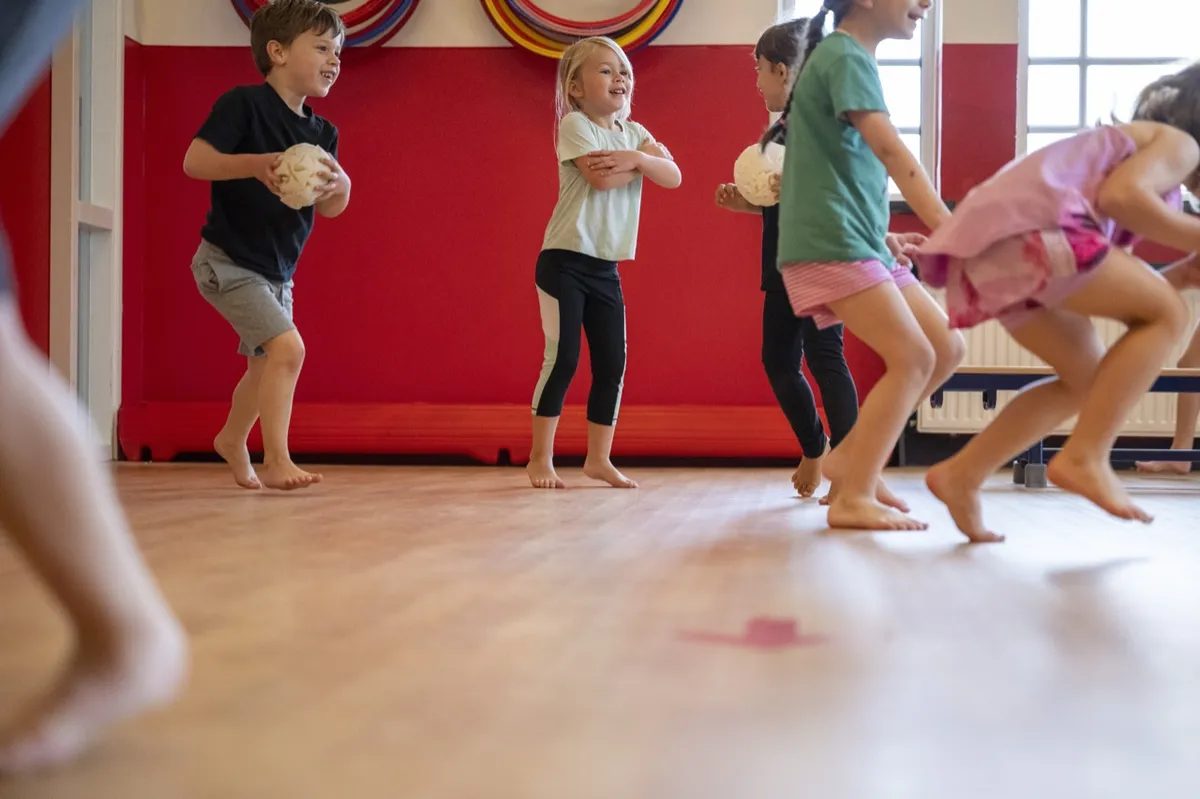
How Music and Movement Help Children Follow Classroom Directions
A significant number of early childhood teachers repeat the same directions all day: “Clean up,” “Line up,” “Sit on the rug,” “Wash your hands,” “Use walking feet,” and “Listen, please.” In preschool, kindergarten, ESL, Montessori, homeschool, and small-group settings, children may not ignore directions on purpose. They may be tired, distracted, excited, still developing self-control, or unsure what the English words mean.
Music and movement can help make directions clearer, more memorable, and easier for young children to follow. A direction that is only spoken may disappear into classroom noise. A direction paired with rhythm, gesture, song, and repeated routine becomes something children can hear, see, feel, and do.
Why Directions Are Hard for Young Children
Following directions requires several developing skills. Children need to listen, understand words, remember the steps, control their bodies, shift attention, and respond at the right time. For young English learners and bilingual children, there is another layer: the child may still be learning what the direction means in English.
This is why visual cues, predictable routines, gestures, and movement are so helpful. When a teacher says “stand up” while standing, or sings a cleanup chant while modeling where toys go, children receive more than verbal instruction. They receive meaning.
Music can also signal that something is about to happen. A familiar transition song can tell children, “Now we clean up,” “Now we gather,” or “Now we get ready to listen.” Over time, the melody, rhythm, and movement become part of the classroom routine.
Music Gives Directions a Pattern
Young children often respond well to patterns. A short chant or song can make directions predictable without turning them into a lecture. For example, “Pick it up, put it away” can become a steady cleanup chant. “Hands on top, that means stop” can help children pause and look. “Walk, walk, walk with me” can support a line-up transition.
The goal is not to make every direction musical. The goal is to choose the directions children need most often and give them a clear, repeated pattern. This can support listening and speaking skills because children begin to connect English words with actions and routines.
For ESL activities for young learners, the pattern matters. Children may first follow the movement, then hum the rhythm, then repeat one word, and eventually say the whole phrase with the group.
Movement Makes Meaning Visible
Movement helps children understand what the teacher is asking. A child who does not fully understand “put it away” may understand when the teacher picks up a toy and places it in a basket. A child who does not yet know “freeze” may understand when everyone stops moving like a statue.
This is especially useful for mixed-level classrooms. Children can respond physically before speaking independently. A shy child can follow the action. A bilingual child can connect the English phrase to the routine. A native English-speaking preschooler can practice self-regulation by matching the movement to the direction.
Music and movement activities can also help directions feel more positive. Instead of repeating “Stop running” several times, a teacher might guide children into a rhythm: “Walking feet, walking feet.” The phrase becomes a practiced routine rather than a correction.
Activity: Hear It, See It, Do It
Try an activity called Hear It, See It, Do It.
Choose three classroom directions children need every day:
“Stand up.”
“Sit down.”
“Line up.”
First, say each direction clearly and model the action. Children watch without speaking. Next, add a gesture for each direction: lift hands for stand up, lower hands for sit down, and point gently toward the line for line up.
Then add rhythm. Clap each phrase once or twice: “Stand up.” “Sit down.” “Line up.” Invite children to clap and copy the movement.
After that, turn the directions into a simple chant:
“Stand up, stand up, tall and strong.
Sit down, sit down, sing along.
Line up, line up, one by one.
Ready now, here we come.”
Use the chant during a real transition. Children who are not ready to speak can move with the group. More confident children can echo the chant, lead one gesture, or choose the next direction card.
This activity helps children hear the language, see the meaning, move with the words, say the phrases with support, and use English during a real classroom routine.
Adapting for ESL Learners and Shy Speakers
For English learners, keep direction language consistent. Switching between many versions of the same command can be confusing. For example, choose one phrase, such as “Line up,” before adding alternatives like “Get in line,” “Find your place,” or “Stand behind your friend.”
Use picture cards, gestures, real objects, and teacher modeling. Give children time to respond. A child who follows the direction without speaking is still showing understanding.
For shy speakers, use group chants before individual speaking. Let children lead through movement first. A child might hold the “sit down” card, point to the rug, or demonstrate the gesture before saying the words aloud.
A Clear Path for Better Classroom Comprehenson
Music and movement help children follow classroom directions when they are used intentionally. Choose one routine that often feels difficult, such as cleanup, lining up, or sitting for circle time. Add one consistent phrase, one gesture, one rhythm, and one repeated song or chant. Practice it when children are calm, not only when the classroom is already busy.
A Musical English-style approach reflects these child-development principles by combining music, movement, role-play, storytelling, performance, and practical language practice. Teachers, educators, parents, guardians, and caregivers can explore Musical English at www.mymusicalenglish.com as a practical approach for bringing these methods into young children’s learning, while keeping expectations realistic, supportive, and child-centered.
Thank you for taking the time with me to learn more about Musical English, a Early Child Development program
Sincerely,
Keila
For more information on Musical English and our programs, click here to learn how Musical English can help improve the life of your child.
* Click here to protect your privacy and safety on the Internet.

Musical English is a very fun early childhood development program where children learn language and communication along with social skills through the incorporation of vocabulary, song, music, dance, and acting.
Get in Touch!
1835 S. La Cienega Blvd.
Los Angeles, CA 90035
©1997-2026 Musical English
Design by OnlineMarketingExperts.agency